
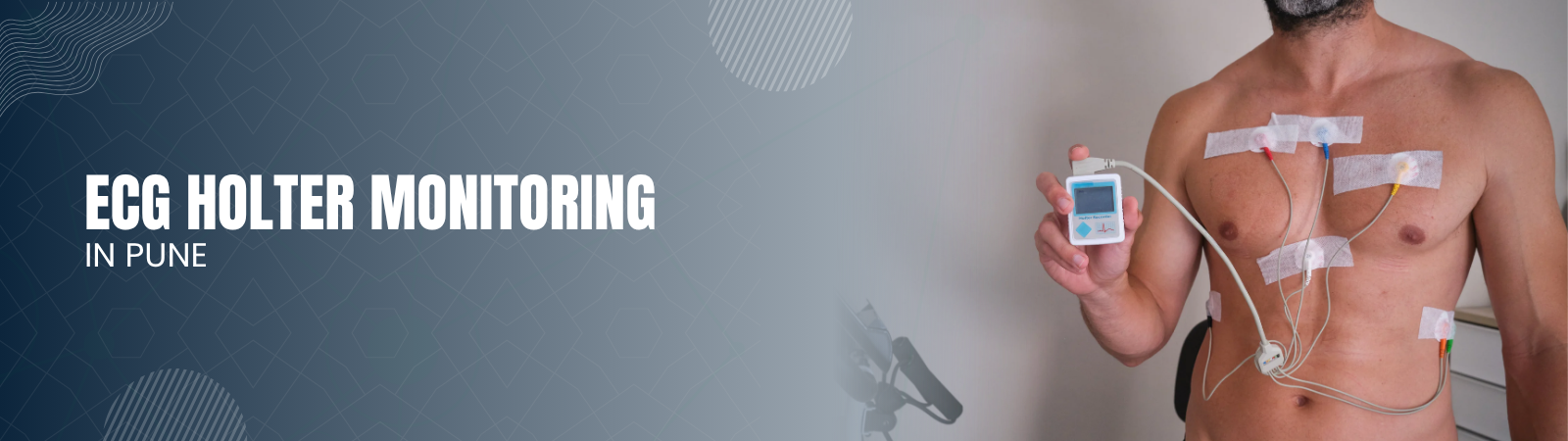
ECG Holter Monitoring in Pune
Some heart problems don’t show up when you want them to. You could sit through a five-minute ECG at the clinic and have it come back perfectly normal, and still walk out with the same palpitations you walked in with. That’s the gap ECG Holter monitoring in Pune is built to close. Instead of a single snapshot of your heart’s rhythm, a Holter monitor records it continuously for a full day or more, while you go about your actual life at work, at home, even while you sleep.
It’s a small device, worn comfortably, and it does its job quietly in the background. No hospital stay, no needles, nothing that stops you from carrying on with your day.
“A resting ECG only tells us what’s happening in that exact moment. But the heart doesn’t always misbehave on cue it might skip a beat only when you’re climbing stairs, or only at 3 a.m. Holter monitoring lets us catch what a five-minute test simply can’t.”
Dr Krishna Dhoot, Interventional Cardiologist in Pune
Experiencing palpitations that come and go?
Book your Holter monitoring consultation with Dr. Krishna Dhoot and get a clearer picture of what your heart is actually doing.
What Does ECG Holter Monitoring Detect?
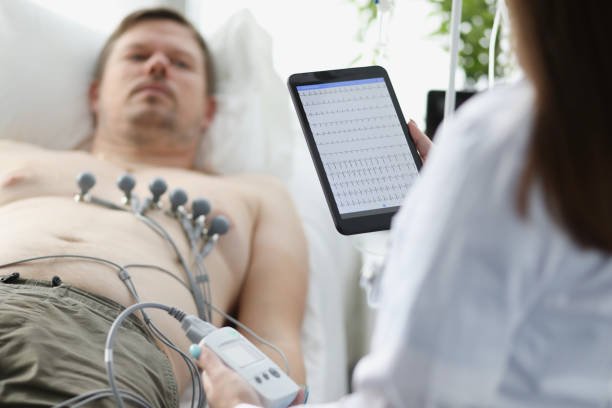
A device this small ends up capturing a surprising amount. Over the monitoring period, it can pick up:
Intermittent arrhythmias that a resting ECG simply misses
Episodes of atrial fibrillation
Unexplained palpitations or a racing heartbeat
Silent, symptom-free rhythm disturbances
How your heart rate responds to daily activity, exertion, and sleep
Whether medication for an existing rhythm condition is actually working
Of course, it isn’t the answer to everything. If your symptoms are rare, say once every few weeks, even a 48-hour recording might not catch one. That’s a conversation worth having with your doctor before you go in for the test.
Why Is Holter Monitoring Done?
Doctors generally reach for a Holter monitor when a regular ECG hasn’t given a full answer, or when the symptoms themselves are the kind that come and go. It’s commonly recommended to:
Investigate palpitations or a heartbeat that suddenly feels “off”
Evaluate unexplained dizziness or fainting spells
Look into symptoms a short in-clinic ECG didn’t explain
Monitor a known arrhythmia over a longer stretch of time
Check how well current medication is controlling a rhythm issue
Follow up after a cardiac event or a procedure
When Is Holter Monitoring Recommended?
This isn’t a test doctors order casually. It usually comes up when something in your symptom pattern or history points toward it:
Palpitations that show up unpredictably
Fainting or near-fainting episodes with no clear cause
A normal resting ECG despite ongoing symptoms
An existing arrhythmia that needs to be tracked over time
Wanting to see how your heart behaves during normal daily activity, not just sitting in a clinic chair
If any of this sounds familiar, it’s worth asking your cardiologist whether a 24-hour ECG monitoring test makes sense for you.
Types of Holter Monitoring
Not every patient needs the same duration. The right one depends on how often your symptoms occur.
01
24-Hour Holter Monitoring
This is the standard option, and it works well for most patients whose symptoms show up fairly often daily or close to it. It’s usually the first step before considering anything longer.
02
48-Hour / Extended Holter Monitoring
When symptoms are less frequent, a single day may not be enough to catch one. Extending the recording to 48 hours (or occasionally longer) improves the odds of capturing an actual episode on record.
Some clinics also offer event monitors for patients with very infrequent symptoms, where the device is worn longer term and activated by the patient only when something happens. Ask during your consultation whether that’s a better fit for your case.
Need ECG Holter Monitoring in Pune?
Book your consultation with Dr. Krishna Dhoot and get your recurring heart symptoms properly evaluated.
How Is Holter Monitoring Done?
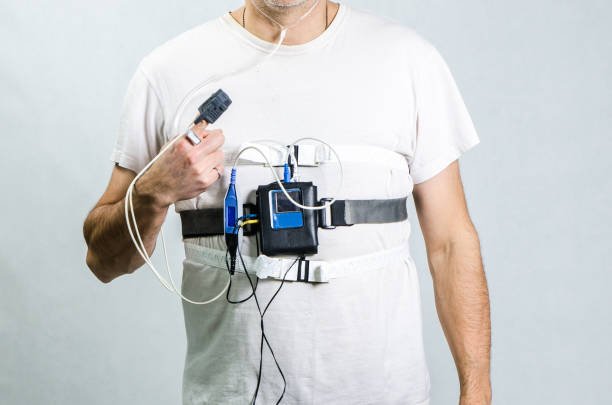
There’s really nothing intimidating about the process itself.
01
A few small electrodes are placed on your chest, similar to a regular ECG.
02
These connect to a compact, portable recording device small enough to clip to your clothing or wear on a strap.
03
You go home and continue your day exactly as you normally would.
04
You’ll likely be asked to jot down a quick note whenever you feel a symptom, along with the time it happened.
05
After 24 to 48 hours, you return the device to the clinic.
06
Dhoot reviews the full recording, matching any rhythm irregularities against the symptom diary you kept.
The device is lightweight and doesn’t get in the way of most daily activities. Depending on the model used, some are even shower-safe; your clinic will let you know beforehand so there are no surprises mid-test.
ECG Holter Monitoring Cost in Pune
The Holter monitor test cost in Pune typically ranges from ₹2,500 to ₹5,000, depending on the monitoring duration and the clinic. At Dr. Krishna Dhoot’s Hrudaysparsh Heart Care Centre, ECG Holter monitoring is available starting at ₹3,000.
3000
depending on the monitoring duration and the clinic
Why Choose Dr. Krishna Dhoot for ECG Holter Monitoring in Pune?
A Holter recording generates a lot of data, and reading it well takes more than just glancing at a printout. Two patients can have similar-looking irregularities that mean completely different things depending on their symptoms, age, and overall heart health. That’s where experience matters.
Dr. Krishna Dhoot is the Director of Hrudaysparsh Heart Care Centre and brings over 18 years of experience in cardiology to every case he reviews.
Patients choosing his clinic for Holter monitoring benefit from:
18+ years of experience in clinical and interventional cardiology
Careful interpretation of rhythm data alongside your actual symptoms and history
Clear, patient-focused explanations of what the results mean
Access to Holter monitoring and other cardiac diagnostics under one roof
Straightforward guidance on next steps if further testing or treatment is needed
Dr. Krishna Dhoot has performed 30,000+ angiographies and 10,000+ angioplasties, a track record that reflects real, hands-on experience in cardiac diagnosis and treatment, not just theoretical knowledge.
Looking for reliable Holter monitoring near me in Hadapsar or nearby areas of Pune? Schedule a consultation with Dr. Krishna Dhoot for an accurate, unhurried evaluation of your heart’s rhythm.
Get your heart rhythm monitored during your everyday activities and discuss your results with Dr. Krishna Dhoot.
Frequently Asked Questions
Is Holter monitoring uncomfortable to wear?
Not really. The device is lightweight, and the electrodes are similar to what’s used in a regular ECG. Most patients forget it’s even there after the first hour or two.
Can I shower or sleep normally while wearing the device?
Sleep, yes, without any issue. Showering depends on the specific device; some are water-resistant, others aren’t. Your clinic will confirm this before you start the test.
How long does it take to get results after the monitoring period?
Once you return the device, the recording is reviewed and results are usually ready within a day or two, depending on how much data needs to be analysed.
What if I don't experience any symptoms during the monitoring period?
That still counts as useful information. A “clean” 24 or 48-hour recording tells your doctor something too, and if symptoms are infrequent, a longer monitoring duration might be suggested next.
Is Holter monitoring safe for elderly patients?
Yes. It’s completely non-invasive, with no radiation and nothing that limits normal movement, which makes it suitable across age groups.
How is this different from a regular ECG?
A standard ECG captures a few minutes of heart activity while you’re resting in a clinic. A Holter monitor tracks your heart continuously over a full day or more, during your actual routine, which makes it far better at catching intermittent issues.
Will I need to avoid any activities while wearing the monitor?
Generally no. You can go to work, walk, do light activity, all as usual. Your doctor will flag anything specific to avoid based on your situation.