

Electrocardiogram (ECG) in Pune
An electrocardiogram (ECG) is a simple, quick, and painless test used to check the electrical activity of your heart. It records the heart’s rhythm and rate and can help a cardiologist identify signs of an irregular heartbeat, reduced blood flow to the heart, or other cardiac concerns.
“An ECG often gives us the very first honest picture of what’s going on inside a patient’s heart. It’s a small test, but in my years of practice, I’ve seen it catch problems early enough to completely change the outcome for a patient sometimes before they even realised something was wrong.”
Dr Krishna Dhoot, Interventional Cardiologist in Pune
Need an ECG in Pune?
Book your consultation with Dr. Krishna Dhoot and get your heart symptoms evaluated.
What does an ECG Measure?
Given how quick the test is, it’s surprising how much information it actually holds.
Abnormal heart rhythms, known as arrhythmias
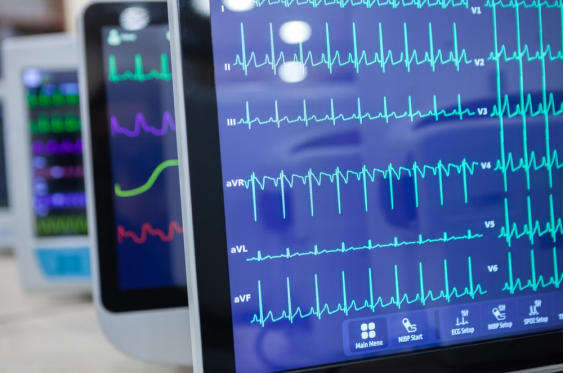
irregular heartbeats arrhythmias
Atrial fibrillation and certain other rhythm abnormalities
An unusually fast or slow heart rate
Certain conduction problems within the heart
Some changes associated with a previous heart attack
Some changes that may occur during an acute cardiac event
Certain patterns that may indicate strain or other cardiac abnormalities
However, an ECG is only one part of a cardiac assessment. Some heart conditions may not produce changes on a resting ECG, particularly if symptoms occur only occasionally.
Why Is an ECG Done?
An ECG is commonly used when a doctor wants to assess whether symptoms could be related to the heart.
It may be recommended to:
Investigate chest pain or discomfort
Evaluate a fast, slow or irregular heartbeat
Look for signs of a previous heart attack
Monitor an existing heart condition
Assess the effect of certain medicines on the heart
Check heart health before certain surgeries or procedures
Need an ECG in Pune?
Book your consultation with Dr. Krishna Dhoot and get your heart symptoms evaluated.
When Is an ECG Recommended?
Doctors don’t order an ECG at random. It’s usually recommended when something about your symptoms or your health history raises a flag.

Chest pain
Palpitations or a feeling of your heart racing

Breathlessness

A known heart condition

Monitoring certain cardiac conditions or treatments

Evaluation before some surgical procedures
Types of ECG Tests
Not all patients will have the same type of ECG. The right test will depend on what your doctor wants to determine.
01
Resting ECG
A resting ECG is the most common type of ECG. It measures the electrical activity of your heart when you are lying down and not moving around.
Small electrodes are attached to particular places on your chest, arms and legs. Your heart’s electrical signals are then recorded by the machine.
02
Exercise/Stress ECG
An exercise ECG or stress test shows your heart’s electrical activity during exercise.
In the test, the person can either walk on a treadmill or exercise on a stationary bicycle, with the heart rate, rhythm, and other parameters being monitored.
This test may be recommended when the symptoms are experienced primarily during activity, and when it is necessary to find out how well your heart is working during activity.
03
Holter Monitoring
A portable device that continuously monitors the rhythm of your heart over a prolonged period is a Holter monitor.
Holter monitoring is able to detect intermittent rhythm disorders that can’t be detected during a short-term ECG.
How Is an ECG Test Performed?
The procedure itself is almost anticlimactic in how simple it is.
01
You will have to lie down on an examination table.
02
Electrodes are attached to the chest and limbs with glue and positioned in certain parts of the body.
03
The electrodes are attached to the ECG machine.
04
This machine measures the activity of your heart.
05
The recording will take place while you are at rest and breathing naturally.
06
The ECG tracing is examined by the cardiologist or trained health care professional.
Some people worry that electricity is being passed through them, but that’s a myth; the machine only reads the current your own heart is already producing. After the recording is done, the electrodes are peeled off, and you’re free to get up and go about your day immediately.
ECG cost in Pune
The average cost of an ECG in Pune is Rs. 400 to Rs 1000. At Dr. Krishna Dhoot Hrudaysparsh Heart Care Clinic. We offer an ECG Test at Rs 400. ECG test cost depends on factors such as the type of ECG performed, the location where you get your test, and the expertise of a cardiologist.
Average cost of ECG Test
400
ECG cost varies by test type, location, and cardiologist expertise.
Why Choose Dr. Krishna Dhoot for 2D Echocardiography in Pune?
An ECG is a simple test, but interpreting it correctly requires clinical context. The same ECG finding can have different significance depending on a person’s symptoms, medical history, and risk factors.
Dr Krishna Dhoot is the Director of Hrudaysparsh Heart Care Centre and has experience in evaluating and managing a wide range of heart conditions.
Patients can benefit from:
18+ years of experience in cardiology
Comprehensive cardiac evaluation
Patient-focused consultation and explanation
Access to ECG and other cardiac diagnostic services
Evaluation of symptoms alongside ECG findings
Guidance on further testing when clinically required
Dr. Krishna Dhoot has performed 30,000+ angiographies and 10,000+ angioplasties, reflecting extensive experience in cardiac diagnosis and treatment.
Looking for an ECG in Pune?
Schedule an appointment with Dr. Krishna Dhoot for a professional cardiac evaluation.
Frequently Asked Questions
Is an ECG test painful?
Not at all. You might feel a slight tug when the electrode pads are removed, but the test itself involves no needles, no electricity entering your body, and no discomfort.
How long does an ECG take?
The recording itself is done within a few minutes. With setup and removal of electrodes included, most patients are in and out within fifteen minutes.
Do I need to prepare in any way before the test?
No fasting, no medication changes, nothing special. You can eat and drink normally beforehand and come as you are.
Can an ECG detect a heart attack?
Yes, both a current heart attack and evidence of one that happened in the past can often be seen on an ECG reading.
If my ECG is normal, does that mean my heart is completely fine?
Not necessarily. Some conditions don’t show up on a resting ECG, which is why Dr. Dhoot may sometimes recommend an additional test if your symptoms suggest something the ECG alone can’t confirm.
How often should I get an ECG done?
It depends on your age, symptoms, and risk factors. Dr. Dhoot can suggest a screening schedule that suits your specific health profile during a consultation.
Is it safe for elderly patients or during pregnancy?
Yes. There’s no radiation and nothing invasive about the test, which makes it safe across age groups, including for pregnant women.
Who should interpret my ECG results?
Ideally, an experienced cardiologist. Reading an ECG accurately takes clinical training, and Dr. Krishna Dhoot’s decade-plus of experience means subtle but important findings aren’t overlooked.
