

A heart attack at 30. It sounds wrong, doesn’t it? Like something that’s supposed to happen to someone much older, someone else’s parent, not you. But it happens more than people assume. Being young isn’t a shield. Smoking, high cholesterol, high BP, diabetes, obesity, a family history of heart disease, months of stress you never quite dealt with any of these can quietly stack the odds against you well before 50.
“A heart attack is not something that only happens after 50 or 60. If a person in their 30s develops new or unusual chest discomfort, breathlessness or other warning symptoms, it should not simply be dismissed because of their age.” – Dr. Krishna Dhoot, Cardiologist in Pune
Can You Have a Heart Attack at 30?
Short answer: yes. It’s rarer than in your 60s, sure, but “rare” isn’t “impossible,” and that distinction matters. A heart attack happens when blood flow to the heart muscle is blocked, usually by a clot that forms on an artery that was already narrowed or damaged. In younger people, that damage often has roots in things nobody’s screened for yet: an inherited condition, years of a certain lifestyle, an underlying issue that just hasn’t surfaced.
So if you’re 30-something and chest discomfort keeps showing up with no clear explanation, don’t just decide it’s gas or acidity or “probably stress.” Get it looked at. A cardiologist can actually tell you what’s going on instead of you guessing at 2 am on Google.
If you are experiencing persistent or unexplained chest discomfort, book a consultation with Dr. Krishna Dhoot in Pune for a proper cardiac evaluation.
What's Actually Causing Heart Attacks at 30?
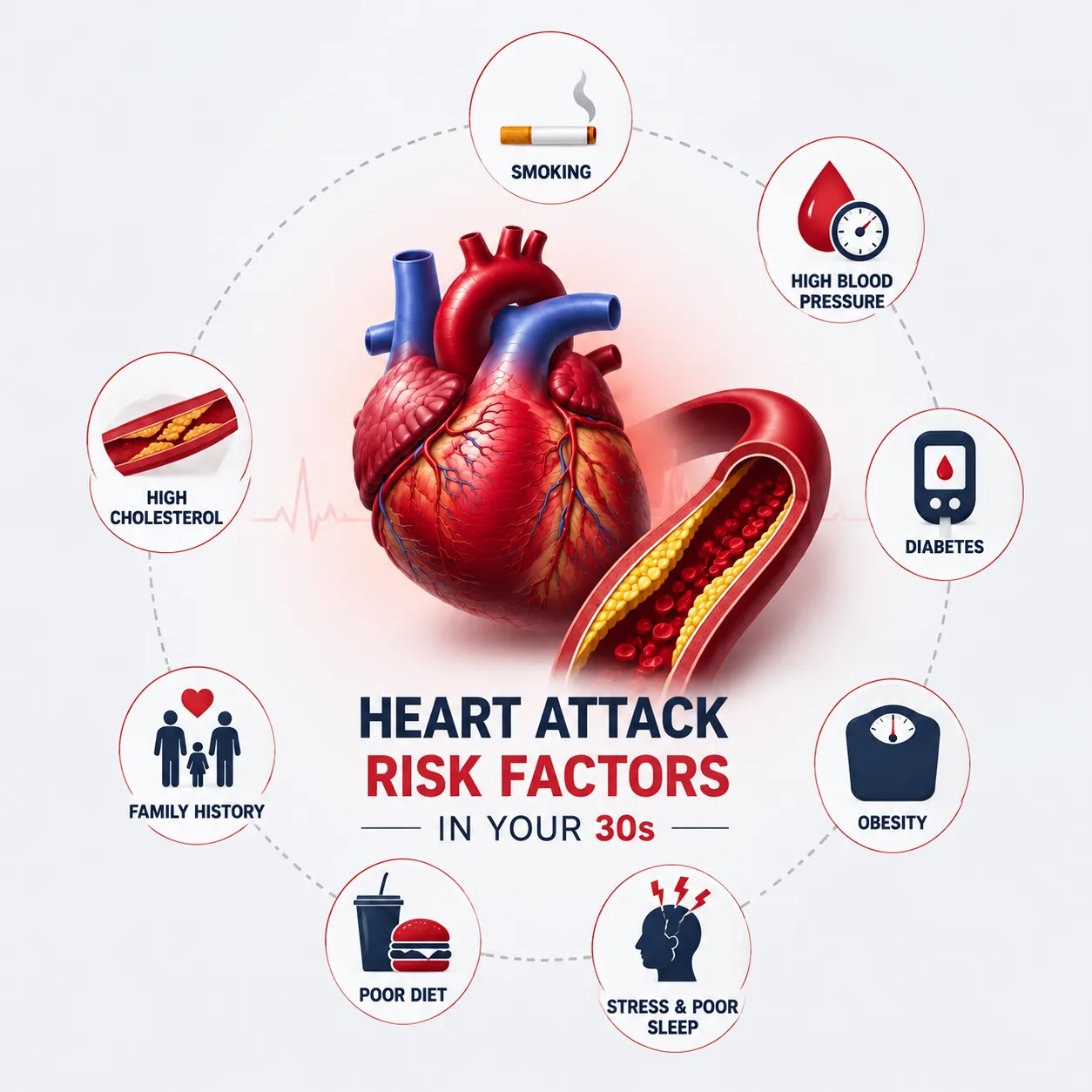
Some common causes and contributing factors are:
Smoking and tobacco use – cause damage to blood vessels and lead to the formation of clots.
High cholesterol – may help cause cholesterol to build up in the artery walls.
High blood pressure – constantly stresses the blood vessels and heart.
Diabetes – can compromise the function of blood vessels, and raise the risk of heart and blood vessel disease.
Obesity and inactivity – may lead to high blood pressure, diabetes and abnormal cholesterol.
Medical history – a history of heart disease in close relatives (or those who lived longer than 60 years).
Dietary habits – poor diet such as high saturated fats, salt and processed foods can impact cardiovascular health.
Ongoing stress and poor sleeping patterns – can lead to a higher risk, indirectly, because of the impact on blood pressure, lifestyle, and overall health.
For some younger individuals, heart issues can also be linked to uncommon conditions, and therefore, individual medical evaluation is important.
What Do the Warning Signs Actually Look Like?
Here’s where people get it wrong most often:
Shortness of breath – It can feel like you can’t breathe properly.
Chest Pain or another part of the body – The pain might be felt in the arm, shoulder, back, neck, or jaw.
Shortness of breath – You might start to notice you are getting breathless, even with no great exertion.
Cold sweating – Unexpected sweating can be a warning sign.
Sick or vomiting – You may become sick or feel more uncomfortable than usual.
An unusual heartbeat – Your heart may feel like it is racing, fluttering or beating irregularly.
Experiencing recurring chest pain, breathlessness, or unusual heart-related symptoms? Book an appointment with Dr. Krishna Dhoot to discuss your symptoms and understand whether cardiac testing is appropriate.
Who's More at Risk in Their 30s?
Age is one factor among many. You should probably be paying closer attention if:
- Heart disease runs in your family, especially if it showed up early in a parent or sibling
- Your blood pressure or cholesterol numbers aren’t great
- You have diabetes
- You smoke, or use tobacco in any form
- You’re carrying extra weight or you’re mostly sedentary
- A past cardiac test came back with something abnormal
- You’ve been under serious, sustained stress for a long stretch
- You’ve had certain cardiovascular issues before
None of this is meant to scare you. It’s meant to give you a head start; the earlier you know, the more you can actually do about it.
What Should You Do If Symptoms Show Up?
Don’t talk yourself out of it because of your age. That’s the mistake people make most. New chest pressure, trouble breathing, sweating, feeling faint, or pain spreading into your arm or jaw or back treat all of that as urgent, not as something to sleep off.
If it’s severe, don’t get behind the wheel yourself. Have someone drive you, or call for help. Let a professional figure out whether it’s your heart or something else that’s not a call to make on your own, especially mid-symptom.
And if chest discomfort keeps returning, even in a mild, easy-to-dismiss way, book a consultation. Guessing gets you nowhere. A proper evaluation does.
When Is It Time to See a Cardiologist?
If chest discomfort keeps coming back, if you’re breathless for no clear reason, if you’re getting palpitations or dizzy spells, or if you’ve noticed you can’t exercise the way you used to, that’s your sign.
A cardiologist might order an ECG, blood tests, an echocardiogram, or a stress test, depending on your symptoms and risk factors. Earlier is almost always the better call.
Can You Actually Prevent a Heart Attack in Your 30s?
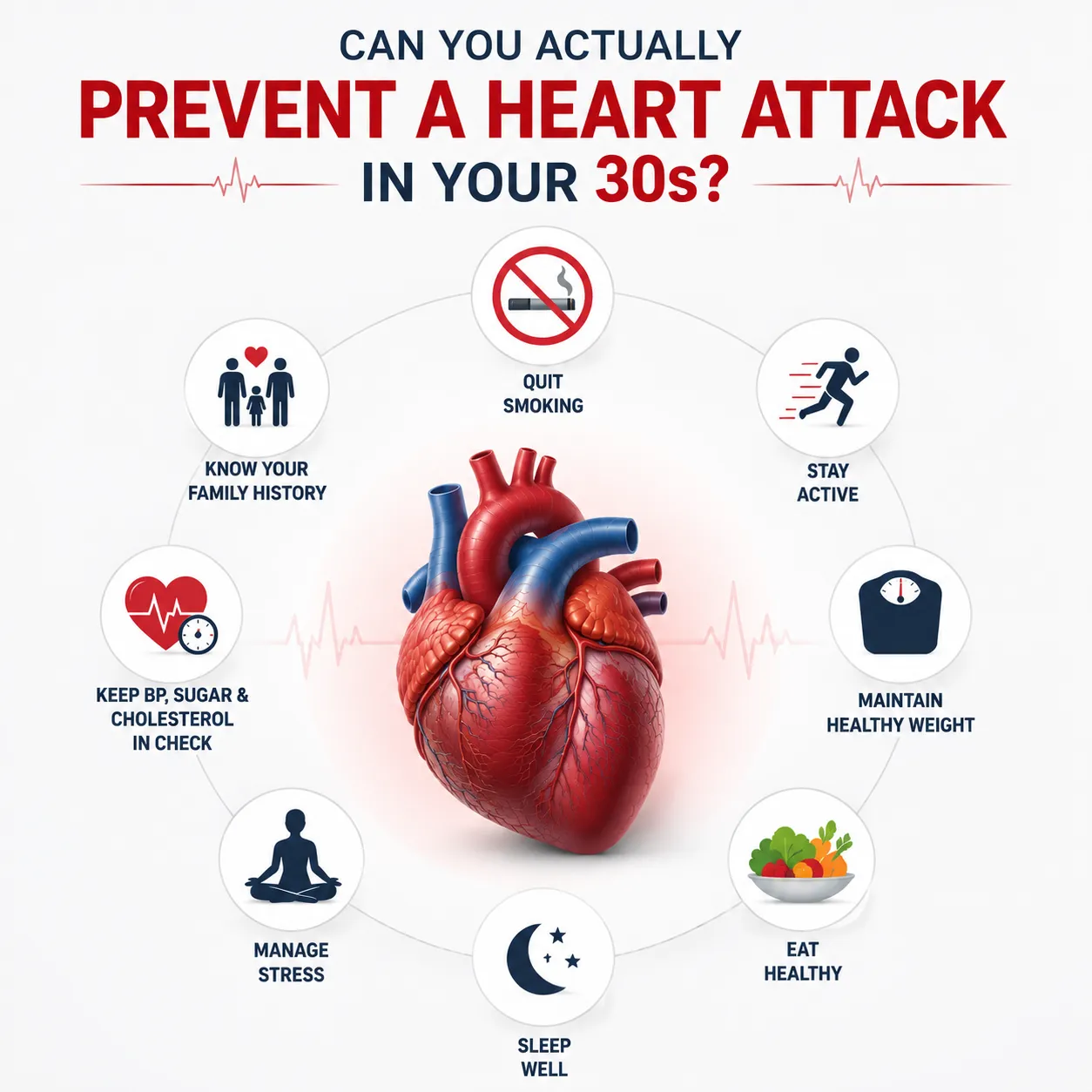
Largely, yes, and honestly, your 30s might be the best window you’ll get, before habits calcify and the numbers get harder to move. A few things that actually help:
Quitting smoking, completely. Staying active, not obsessively, just consistently. Keeping your weight somewhere reasonable. Eating more vegetables, fruit, whole grains, less of the processed stuff. Keeping blood pressure, sugar, and cholesterol in a healthy range. Actually sleeping enough. Managing stress in a way that works for you, not some generic tip you read once. And knowing your family history well enough to bring it up with your doctor instead of assuming it doesn’t matter.
If you have risk factors or a strong family history of heart disease, schedule a preventive cardiac check-up with Dr. Krishna Dhoot in Pune to understand your individual risk and whether any testing is appropriate.
Book a preventive heart check-up with Dr. Krishna Dhoot in Pune to understand your cardiovascular risk and discuss whether any heart tests or lifestyle changes are appropriate for you.
Frequently Asked Questions About Heart Attack at 30
Can a healthy 30-year-old have a heart attack?
Yes. Uncommon, but it happens, particularly when there are real risk factors or an underlying condition already at play.
What's the most common warning sign of a heart attack?
Chest pressure or tightness is the classic one, but the symptoms genuinely vary; breathlessness, sweating, nausea, dizziness, or pain reaching into the arm, jaw, back, or shoulder can all show up too.
Can stress cause a heart attack at 30?
Long-term, serious stress can chip away at your cardiovascular health and add to overall risk, especially stacked with other factors. But don’t just assume chest pain is “stress”; rule out the more serious stuff first.
Should I see a cardiologist if I have chest pain at 30?
Yes, especially if it’s new, keeps recurring, has no obvious cause, or comes with breathlessness, sweating, dizziness, or pain spreading elsewhere.
